Showing posts sorted by date for query hands all around. Sort by relevance Show all posts

Wednesday, June 14, 2023

Atlanta Garden #6: The Hand of War


Atlanta Garden #6: The Hand of War by 
Jeanne Arnieri

General William Tecumseh Sherman (1820-1891) 
from the Brady Studios, 1864 
According to Atlanta's Intelligencer: "The barbarous chief of barbarian hordes."

Although painted as a rampaging villain in Lost Cause narratives recalling the Southerners' war, Sherman knew the consequence of his invasion in the summer and fall of 1864. Each step was planned and defended articulately.
“We are not only fighting armies but a hostile people, and must make old and young, rich and poor, feel the hard hand of war.”

The Hand of War by Denniele Bohannon 

Sherman, who'd once lived in Georgia, gave much thought to his Atlanta strategy. He knew the country; he knew the city's importance to the Confederacy's supply lines.
"All that has gone on before is mere skirmishing---The War now begins.” Sherman to his wife before taking Atlanta.
Sherman (right) leaning on a Parrott cannon
used to shell Atlanta. Batteries were stationed north and west of town.
Sherman's order: "Fire slowly and with deliberation between 4 p.m. and dusk."

Carrie's diary for August 15, 1864, transcript from the Atlanta History Center


The shelling's purpose was to convince Atlantans to abandon the city and to demoralize those remaining (except perhaps slaves hoping for deliverance and Unionists like the Berry/Markham/Healey family.) 

Unionist Cyrena Stone was in her garden in May, 1864 when she heard Union cannon in the distance: “O that music….Never fell on my ear any sound half so sweet.”

The Hand of War by Becky Collis

Carrie Berry experienced Sherman's assault nightly as did Sam Richards, worried more about his shop's inventory than his safety.
"Sallie and I walked out Marietta street this morning to see the devastation caused by the bombardment, and truly that part of the city is badly cut up." Sam Richards, August 29, 1864.

At the same time destruction of rail lines outside Atlanta rendered the city useless as a Confederate source for munitions and weapons. Die-hard residents were in danger of starvation as supplies were halted. General Hood pulled all Southern troops out of the city on September 2, leaving it open to Union occupation. 

Confederate General John Bell Hood (1831-1879), Brady Studios

Buildings & tracks in the Western & Atlantic Railroad yards,
the line founded by Carrie Berry's family. This roundhouse
was near their home.

Hood had given responsibility for moving a trainload of ammunition and armaments out of Atlanta but despite repeated instructions his quartermaster, Colonel M. B. McMicken failed to act.
"He had more than ample time to remove the whole.... I am reliably informed that he is too much addicted to drink of late to attend to his duties." General John Bell Hood, September 4, 1864.
Hood realized it was too late to move those railroad cars stuck on tracks near the Iron Mill and the Atlanta Machine Company. Rather than leave the armaments to Sherman's Army, Hood ordered the cars burned.

Jeanne Arnieri's second set of blocks.

The Rolling Mill, a combustible factory, was adjacent
to the tracks.
"The Ammunition Train was fired and for half an hour or more an incessant discharge was kept up that jarred the ground and broke the glass in the windows around."  First person account: September 1

The fictional Rhett Butler and Scarlett O'Hara leaving the burning city

Well, Margaret Mitchell will tell you what happened next. One of the most memorable scenes in movie history is Gone With the Wind's burning of Atlanta after Hood ordered the munitions cars destroyed. The explosions set the factories (and a good deal of the neighborhood) afire. Neighbors had been warned to leave.

The Hand of War by Becky Brown

The Markhams' Rolling Mill as it appeared when Union armies 
entered the city. The only remains of the box cars were wheels and axles.

Carrie's account of the Confederates burning the box cars

Despite all the eye-witness accounts, local Atlanta history too often remembers that it was Sherman not Hood who blew up the train and the Markham factory. Here is a paragraph from Franklin Garrett's mid-20th-century history Atlanta and Environs


The Block


BlockBase #1879, about 1880-1900
A bird's foot, a cat's paw or a human hand?

Pennsylvania-German quiltmakers called the pattern Batsche, a reference to hands. Ruth Finley in 1929 published the nine-patch as Hand of Friendship but for Carrie Berry in Atlanta it can stand for the hard Hand of War.


The Hand of War by Addie

Above the cutting instructions for 10" and 15" blocks.

About 1910

Saturday, September 10, 2022

Caroline Holds a Quilting


"The Brothers Assist in the Quilting," Harper's,  April 21, 1883*

Emily Pillsbury came to Georgia from New Hampshire in the 1830s to work as a tutor for a plantation family near Savannah. In her 1850 memoir she writes of a quilting put on for the slaves by Caroline, the overseer's wife. Caroline was a slave herself but in her position of authority she had privileges.

Freed people in Vicksburg, Frank Leslie's Illustrated Newspaper, February 27, 1864

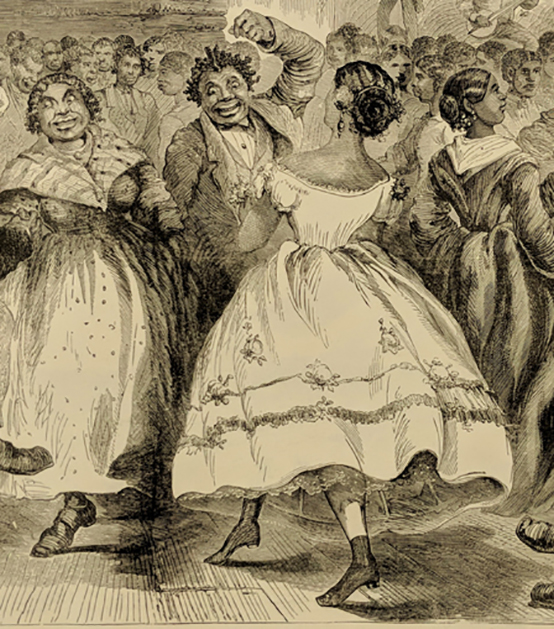
"This quilting party was held in the night, the first part of which was devoted to work on the quilt, the latter part to festivity and dancing."

Judy by Alice Huger Smith, late 19th century

"It may seem strange to my readers to hear of men being invited to a quilting but I can say to them, that among the Southern field hands, the women can hoe as well as the men, and the men can sew as well as the women."

Emily Pillsbury Burke (1814-1887)

"Caroline...was one of my best friends on this plantation...when her guests had all assembled and were seated around the work, she sent for me....the men and women were seated promiscuously around the frame, very quietly yet...expeditiously plying the needle to all sorts of lines, both crooked and straight."

Alfred Waud, Ration Day, 1867

Emily had seen finer quilting lines and more chatter around the frame in New England. In Georgia: Large needles for work-hardened hands and marking with charcoal.

                                            Mississippi Department of Archives, about 1900

* I've misdated this illustration as 1863 in the past but the clothing and a little more research date it to 1883. 

Emily Pillsbury's first edition was titled Reminiscences of Georgia.


Wednesday, August 10, 2022

American Stars #8: Steadfast Stars-The Mays


American Stars #8 
Steadfast Star by Becky Brown

The block recalls the steadfast May family of reformers.


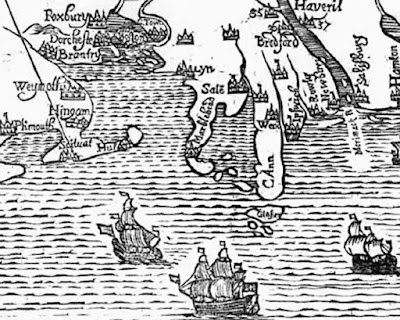
The May family traces their American roots to Puritan John May (about 1590-1670) of Mayfield, England, a ship master who sailed "The James" back and forth across the North Atlantic. At about 50 he and his family settled in Roxbury, Massachusetts Bay colony, founded ten years earlier.

Joseph May (1760-1841)

We'll skip several generations here to Dorothy Sewall (1750-1825) and Joseph May, married in 1784. Dorothy's mother was a Quincy and related to the Hancocks. You can trace the whole Massachusetts aristocracy (Being English and Early is an asset, as we have noted) at Dorothy's grave site:
https://www.findagrave.com/memorial/107501334/dorothy-may

Dorothy gave birth to eleven children but only six survived to adulthood. She and Samuel raised their children at #1 Federal Court in Boston (a wooden house long gone.) Joseph was at one point a successful merchant in groceries but a dishonest partner caused a business failure and Joseph's subsequent psychological depression. Their house, near today's South Station, was a gift from friends. According to a memorial booklet: 

"He formed the resolution never to be a rich man; but to withstand all temptations to engage again in the pursuit of wealth."

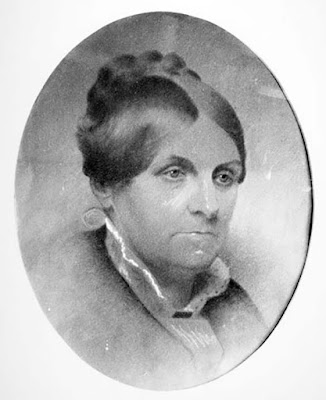
Abigail May Alcott (1800-1877)

Among their four girls was Abigail May who married the impractical Bronson Alcott in 1830. Bronson's unfortunate economic attitudes must have appealed to a woman whose charming father wanted nothing to do with financial success. Abba and Bronson raised four daughters in straightened but happy circumstances. Our 2021 B.O.M. Hands All Around tells the story of American Stars the Alcott family. See a link below.
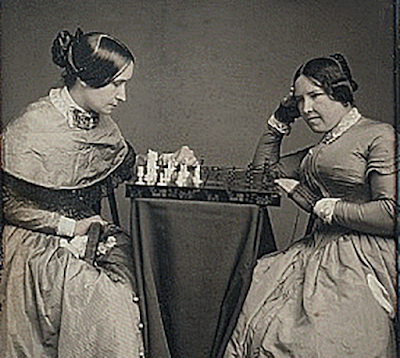

Abba's sister Elizabeth Sewall May Willis married young, had three children and died after the birth of the last when she was 23. The Nelson Atkins Museum in Kansas City owns this daguerreotype of her daughter, another Elizabeth Sewell Willis Wells, playing chess with sister-in-law Mercy Ellis Wells about 1850.

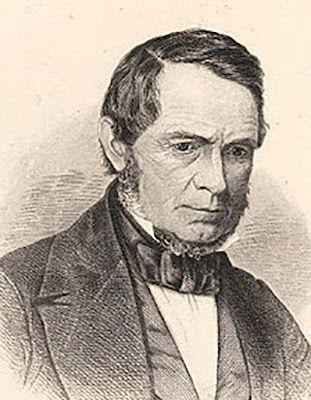
Samuel Joseph May 1797-1871
A steadfast abolitionist

Abba's Brother Samuel May became a Unitarian minister in Syracuse, New York. He was a leading antislavery activist speaking, writing and organizing radical yet peaceful resistance. His most famous action might be the 1851 "Jerry Rescue," when he and Jermain Loguen planned to defy the new Fugitive Slave law, which demanded  fugitives in Northern states be returned to their former owners. Northerners who refused to cooperate with "slave stealers" were subject to arrest.

Jerry Rescuer Jermain Loguen (1813-1872)
who was forced to hide in Canada after the rescue.

William "Jerry" Henry had been arrested and was on his way South when an irate group of Syracuse citizens freed him, hid him and ferried him to Canada. The October 1st anniversary of the Jerry Rescue day was celebrated annually in Syracuse until the Civil War. Reverend May was often hung in effigy by the opposition on October 1st.
"When the people saw a man dragged through the streets.. treated as if he were the worst of felons; and learnt that it was only because he had assumed to be what God made him to be, a man, and not a slave...there was a mighty throbbing of the public heart; an all but unanimous up rising against the outrage." Samuel May


Steadfast Star by Denniele Bohannon 

The Block


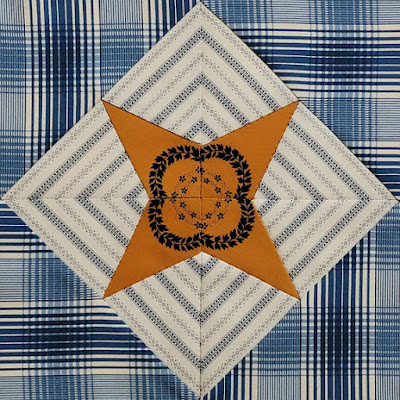
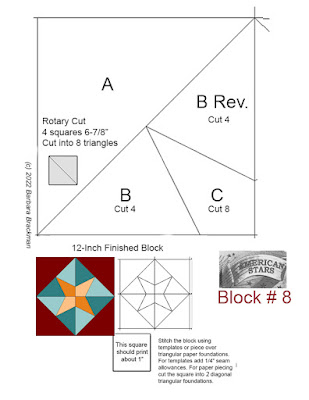
Steadfast Star is an original design, a four-patch.

Print the pattern on an 8-1/2 x11" sheet of paper. Note the inch square block for scale.

Steadfast Star by Jeanne Arnieri

Later Generations

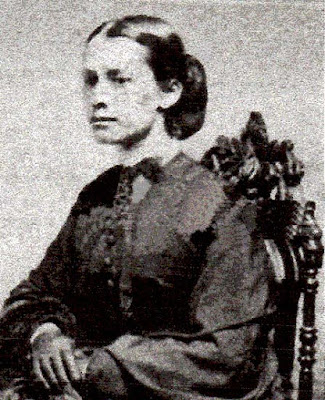
Charlotte Coffin May Wilkinson (1833-1909)

The four children of Samuel and wife Lucretia Flagg Coffin May were close cousins of the Alcott family. Louisa May Alcott was particular friends with Syracuse cousin Charlotte May. 

Some of the May children grew up to be ministers; others socialites. Charlotte's obituary tells us she "took a prominent part in the social life of Syracuse and was conspicuous in educational work. She was a devoted worker for May Memorial Church, of which her father was the founder." Her husband, Alfred Wilkinson was a prominent banker from a Syracuse founding family.

Their eldest son Alfred II was a lawyer. He never married, probably due to a broken engagement and a broken heart.

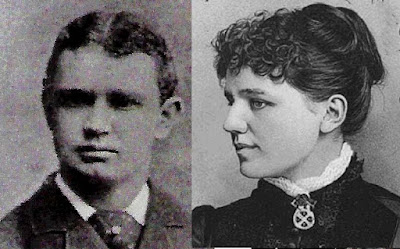
Alfred (Fred) Wilkinson II (1858-1918) 
& Varina (Winnie) Ann Davis II (1864-1898)

In 1886 Winnie Davis, the "Sweetheart of the Confederacy," visited Syracuse, undoubtedly entertained by its first families including the Wilkinsons. She and Alfred fell in love. Not only was he a Yankee; he was the grandson of a leading antislavery advocate. Winnie's father Jefferson Davis told her he'd rather see her dead than married into the May family.

After Jefferson Davis's death the press North and South continued the hate campaign. The couple broke their engagement and neither ever married. Winnie died at 34 in 1898.

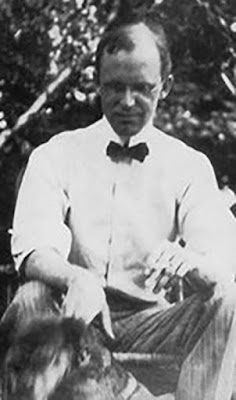
Henry Wilhelm Wilkinson (1869-1931)

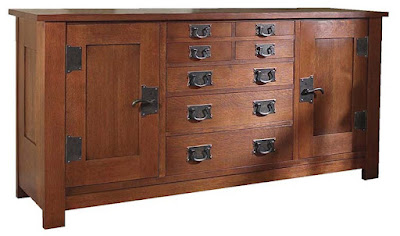
Alfred's younger brother Henry followed a different path. Trained in architecture at Syracuse University he went to work for Syracuse furniture maker Gustav Stickley in 1900, developing the workshop's characteristic arts and crafts style.

Stickley sideboard made for Gustav's Syracuse home

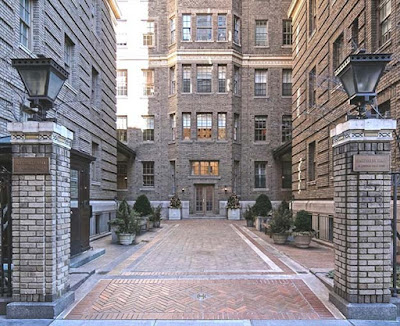
Henry also designed buildings. The saga of the Mays changes course with a press release on a New York City apartment house Henry designed in 1910: Harperley Hall at Central Park West & 64th.

Still Standing

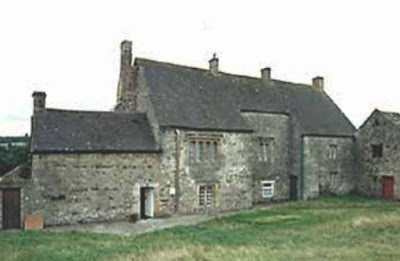
The corporation's directors: Alfred Wilkinson, John Wilkinson and Henry W. Wilkinson. The new buildings was advertised with reference to the Wilkinson's "Impressive pedigree extended centuries back into British peerage. The family’s extensive estate near Lanchester, England included a 17th-century manor house was known as Harperley Hall."
Harperley Hall in England

What! Not a word about Captain John May of "The James", the Jerry Rescue or Louisa May Alcott.

And one more May:
Eva LaPlante is a May descendent who has written two recent books on the Alcotts based on their writing.
My Heart Is Boundless: Writings of Abigail May Alcott, Louisa’s Mother

Marmee & Louisa. See a preview of the biography here:https://www.amazon.com/dp/1451620675/ref=rdr_ext_sb_ti_sims_1

LaPlante's gone into detail about Abba's Boston May family, welcome information.

Watch a 45-minute YouTube presentation by Eva:
https://www.youtube.com/watch?v=bAhrjyK8Hvc

Further Reading
Links to the Hands All Around stories & blocks about the Alcotts:
 
Posts on the Mays:

Becky's blocks x 6
Wednesday, June 29, 2022

Freedom's Friends #4: The Dove for Jane Johnson


Freedom's Friends: Block #4
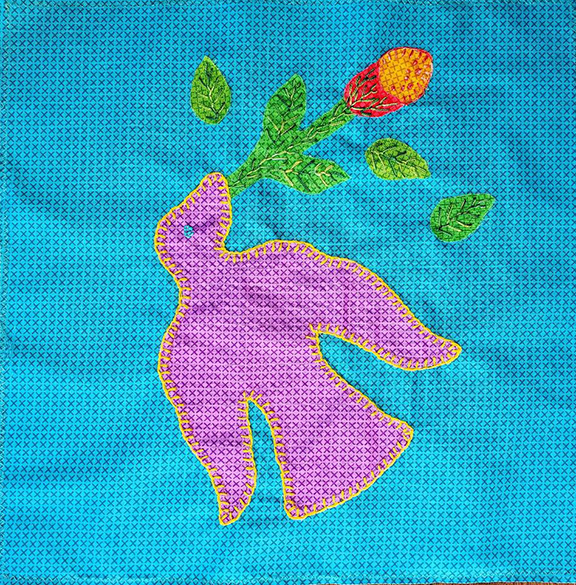
The Dove by Denniele Bohannon

The dove recalls Jane Johnson, a freed woman who became famous in the 1850s.
Jane Williams (?) Johnson (Born about 1830–1872)

In July, 1855 William Still at the Philadelphia Vigilance Committee offices received a hand-delivered note:

Still ran to get help from fellow Committee member Passmore Williamson. One of the group's prime duties "when hearing of slaves brought to [Pennsylvania] was to immediately inform such persons that they were not fugitives...were entitled to their freedom without another moment's service [and] advice of counsel without charge."

(1806-1882) 1863 portrait

Jane Johnson was the Washington-born slave of John Hill Wheeler, a North Carolina politician living in Washington City. He had purchased her about 1853 with sons Daniel, about 10, & 9-year-old Isaiah. (Her previous owner sold another son.) The Wheelers and Johnsons had taken the train cars from Washington and spent some time with the parents of Wheeler's wife Ellen, the Thomas Sullys. 

Ellen Oldmixon Sully Wheeler (1816-1896) and her own two sons, 
painted by her father Thomas Sully

The Sully House
Library Company of Philadelphia

The Wheelers were on their way to Nicaragua where Wheeler was U.S. Minister for three years. 
While waiting for a ferry, the next step in their journey, they spent a few hours in Bloodgood's Hotel with Jane locked in a room while the Wheelers ate a meal. Jane had a plan---in her trunk was a new dress, the clothing of a free woman to wear when she got to New York where she planned to escape. But seeing an opportunity in Philadelphia, she communicated with hotel employees who knew just the people to contact.

Library Company of Philadelphia
Bloodgood's Hotel on the Delaware River

Jane was legally free in Pennsylvania despite the 1850 federal Fugitive Slave Act. William Still was one of many writers who told of her journey.
"Slave-holders fully understood the law...Consequently they avoided bringing slaves beyond Mason & Dixon's line....But some slave-holders were...too arrogant to take heed. [Wheeler] received a terrible shock at the hands of the Committee." 

Williamson second from left, Jane, her boys and probably
William Still in the top hat from Still's 1872 book The Underground Railroad.

The Pennsylvania Anti Slavery Society published Jane's tale too.

As the ferry was loading Williamson found: 
"Jane and her children seated upon the upper deck [inquiring] 'You are the person I am looking for, I presume.' Mr. Wheeler, who was sitting on the same bench, three or four feet from her, asked what Mr. Williamson wanted with him. The answer was, 'Nothing, my business is entirely with this woman.' Amid repeated interruptions from Mr. Wheeler, Mr. Williamson calmly explained to Jane that she was free under the laws of Pennsylvania, and could either go with Mr. Wheeler, or enjoy her freedom by going on shore."
There were various assaults, alleged and otherwise, with Isaiah screaming and five dockworkers guarding her exit:
"Wheeler...clasped her tightly round the body. Mr. Williamson pulled him back and held him till she was out of danger from his grasp. Jane moved steadily forward towards the stairway leading to the lower deck. It was at the head of the stairway, if we may believe Mr. Wheeler, that he was seized by two colored men and threatened by one of them; but the most careful and repeated examination of witnesses has failed to elicit any testimony to a threat except one made on the lower deck. She was led down the stairs of the boat and her children picked up and carried after her; one of them cried vociferously. She and her children were conducted ashore, and put into a carriage, and, amid the huzzas of the spectators, were driven off to a place of safety."
Some accounts say that place of safety was Letitia and William Still's boarding house. Abigail Goodwin, a New Jersey "agent" worried about Jane.
 "You will take good care of Jane Johnson I hope, and not let her get kidnapped back to Slavery. Is it safe for her to remain in your city....do try to impress her with the necessity of being very cautious and careful against deceivers, pretended friends. She had better be off to Canada pretty soon."
With his political clout Wheeler soon had Passmore Williamson arrested. He was held in jail for 100 days for contempt because he refused to tell the court the Johnsons' hiding place.

Passmore Williamson (1822-1895) in jail
Chester County Historical Society

Williamson said he didn't know and he was probably truthful as the Vigilance Committee operated on a "need to know" basis. His imprisonment and trial became a useful tool in abolitionist public relations.

Not everyone in Philadelphia was sympathetic to the antislavery cause. An 1855 cartoon showing "The Follies of Philadelphia" includes Williamson telling Jane Johnson: "While I engage your Master in conversation you will have a fine chance to escape." Jane did not really "escape." She walked away, exercising her rights.

Jane took her boys first to New York and then to Boston but she bravely returned for her rescuers' trial, which resulted in acquittal or reduced sentences for William Still and his accomplices.


 The Block


A simple dove from an 1858 album recorded by the Connecticut project.

The slide has shifted color over the past 30 years
so I've color corrected it but it is not this red.

The Dove by Barbara Brackman

The pattern measures 8" and will fit into the center area of the block with space around it for more applique or your name, the date, a sentiment etc.


 An inked inscription (drawing better than the poem!)

Nadal Quilt/Smithsonian/1847

We find many doves in mid-century applique from Baltimore to Connecticut and parts South.

Baltimore/Jeffrey Evans Auction
There are two pattern sheets. Print each out 8-1/2" x 11". See the inch square for scale.

Now the model makers thought my pattern (designed to fit the paper) was a bit sparse. 

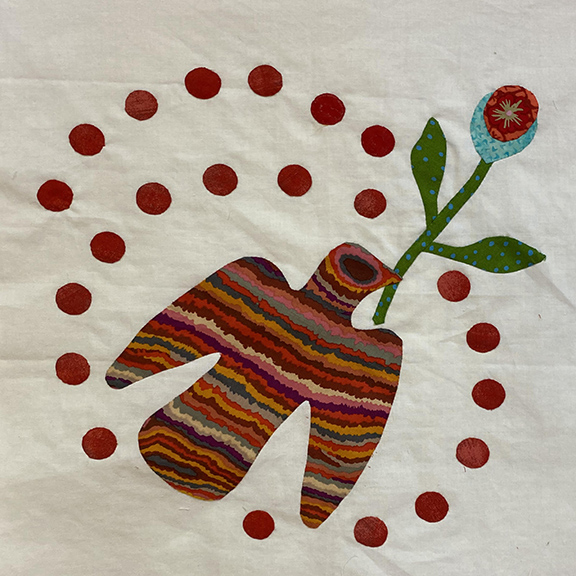
The Dove by Georgann Eglinski
But we encourage addition....

Denniele solved the space problem with a ring of fussy cut dots. Georgann says she is stealing this idea and you can too.

Jeanne Arnieri added a few leaves to her small scale block.

Becky Brown moved the image from the diagonal and added more
foliage.

And then there is Robyn Gragg!

Georgann, many dots

Further Reading

Jane's story has been told often. See a summary at the Library Company of Philadelphia's webpage:

The P.A.S.S. published an account of the Williamson case in 1855 with Jane's testimony beginning on page 14.
https://tile.loc.gov/storage-services/service/ll/llst/033/033.pdf
.
Several novelists have used the tale, among them Lorene Cary in The Price of a Child.

Here's our Facebook group: Freedom'sFriendsQuiltBOM. It's public so you can join or not.
https://www.facebook.com/groups/325851666128986

If you'd like to buy all the patterns now for $12 in a PDF to print yourself here's a link to my Etsy shop:
https://www.etsy.com/listing/1155035028/freedoms-friends-applique-quilt-bom