Wednesday, December 9, 2020

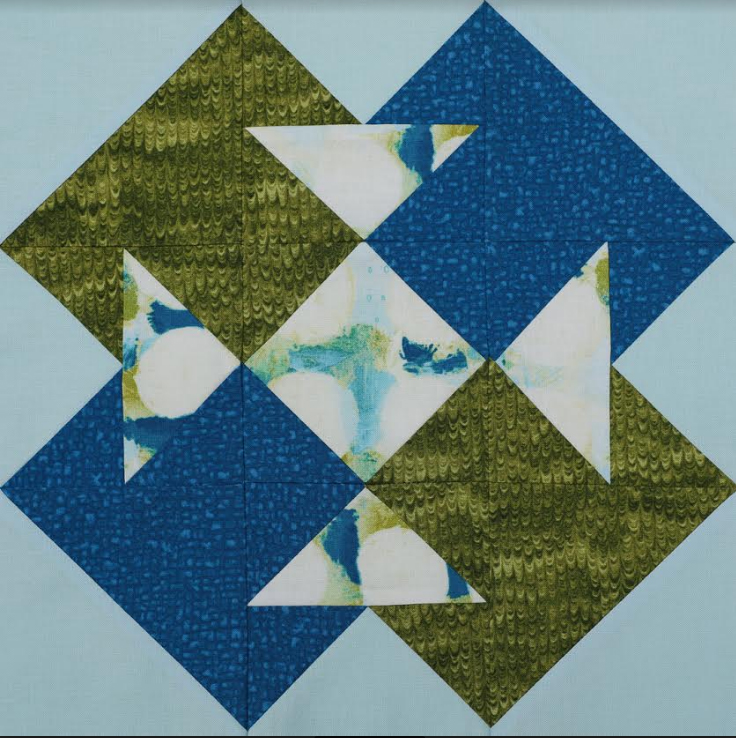
Yankee Notions #12: T Quilt

Yankee Notions #12, The T Quilt by Dorry Emmer

The T quilt seems to have represented Temperance, a national reform movement but one many Southerners resisted until the latter part of the 19th century. The last Yankee Notions block can stand for a variety of female reform notions.

Lula Barnes Ansley (1861-1914) of Georgia was active
in the post-Civil-War Women's Christian Temperance Movement


We're most familiar with the temperance/prohibition movement and organizations devoted to abolishing slavery and winning women the right to vote because they resulted in Constitutional Amendments but there were many other ideas from dress reform to diet changes that captured the do-gooder's heart.

One could be a fruititarian as New Englander Louisa May Alcott's family was for a few hungry weeks, or replace white bread with whole wheat crackers, a diet that curbed one's sexual appetites according to Connecticut-born minister Sylvester Graham, inventor of graham crackers.


Most of these reform movements were Yankee Notions, originating in the North, perhaps another form of Yankee tinkering.

The T Quilt by Denniele Bohannon


The Inebriate's Hut or the First Fruits of The Maine Law
by Mrs. Southworth, best selling novelist

The first state-wide liquor reform law passed in Maine in 1851, soon adopted by other New England states: Massachusetts, Rhode Island and Vermont. Thereafter liquor prohibition laws were often called Maine Laws.

Block from the Griffiths Quilt, Orangetown Museum in New York.
The album quilt has a key in rhyme. For this block of a pitcher:

"Then the one by Mrs. Sarah Haring
Has a flower like the rose of Sharon,
Also a pitcher, let up fill our glass
And let us have the Maine law come to pass."

Campaigns to outlaw prostitution and publish information on birth control were subjects gentlewomen pretended to know nothing about.

British family of nine children, early 1860s.
Being as rich as Queen Victoria did not give one access to birth control information.

William Tracy Gould (1799-1882) 

Southerners like Georgia lawyer William Tracy Gould wanted nothing to do with reforming women. At the dedication of a Georgia girl's school in 1853 he decried "female reformers of the north and east," advocates of "revolting forms of modern fanaticism; the most absurd and ridiculous is that, which assembles... in those parliaments of petticoats, called 'Women's Rights Conventions'."

1860 Graduation Locket
 Southern Masonic Female College

The girls he addressed at the Southern Masonic Female College were not to be seduced by outside agitators, "silly women, captives of Satan." He knew of what he spoke, having been born in Connecticut and educated at Yale.

Why dress needed reforming

The Block

The T Quilt by Denniele Bohannon


BlockBase #2350 was a popular block with the earliest publication in 1896 in the Orange Judd Farmer (agricultural magazine with a publisher named Orange Judd.) Other variations were published in the 1880s as Double T and Capital T, according to Wilene Smith.

As a nine patch BlockBase #1662a

12-Inch Block
A - Cut 2 squares 4-7/8". Cut each in half with a diagonal cut. You need 4 large triangles.
B - Cut 4 squares 5-1/4". Cut each into 4 triangles with 2 diagonal cuts. You need 16 small triangles.
C - Cut 4 rectangles 3-3/8" x 5-1/4". Trim. Or use the template. 
D - Cut 1 square 3-3/8".

18-Inch Block
A - Cut 2 squares 6-7/8". Cut each in half with a diagonal cut. You need 4 large triangles.
B - Cut 4 squares 7-1/4". Cut each into 4 triangles with 2 diagonal cuts. You need 16 small triangles.
C - Cut 4 rectangles 4-3/4" x 7-1/2". Trim. Or use the template. 
D - Cut 1 square 4-3/4".


 The T Quilt by Dorry Emmer

This Month's Tangible Yankee Notion
Irons

She's using a sad iron, which she has heated on a stove.
The word sad here means heavy, an archaic meaning.


Sad Irons were manufactured items that iron foundries north and south produced before the Civil War and after.


The New England Butt Company in Providence Rhode Island
manufactured many.


A clever post-War Yankee Notion, Mrs. Potts's Sad Iron.

In 1870 Mary Florence Webber Potts of Ottumwa, Iowa was the young mother of a toddler, married to a drygoods merchant, both of which may have had something to do with her brilliant idea. She invented several versions of an improved Sad Iron. Her three improvements:
  • A wooden handle that did not get hot when the iron was heating.


  • A detachable  handle that was used with several irons, one "iron in the fire" while the other was being used and cooling down
  • Points on two ends to iron in tight spots.


She patented her first improvement in 1870. Mrs. Potts' Sad Iron was a huge success.

Mary Florence Webber Potts (1850 – 1922)

A cold handled sad iron: "Just what your mother wants."
You didn't have to use a hot pad to hold it or wait while another warmed up.

Improvements in ironing, more time to join reform groups.

The T Quilt by Becky Brown


Yankee Notions sampler by Denniele Bohannon
18" Blocks
And we are done!

Read more about the Maine Law:

And more about Mary Potts:
Posts about Temperance and quilts


The Tennessee project recorded a sampler with
papers telling each block's name. The T block
is labeled "Kansas T's."
Kansas passed a prohibition law in 1881.
We still live with parts of it.
Can't buy wine in the grocery store.

Saturday, December 5, 2020

Southern Log Cabin Quilts After the War


Detail of a log cabin quilt with an inked date 1868.
Alamance County Historical Society
Pictured in The Book of Burwell Students

We have written records of Log Cabin quilts before 1870 but few actual quilts with dates inscribed. The signature above refers to Frances Annthea Holt Slade Williamson (1837-1918) of Alamance County, North Carolina.  The quilt is said to have been made by Fanny Williamson for a younger sister, either Mary Elizabeth or Emma Virginia Holt.

 Log Cabin with the date 1874
Wool, silk & mixed fabrics
Smithsonian

Textile historian Virginia Gunn found Log Cabins mentioned by name at the Ohio State Fair in 1863 (the pattern seems to have developed about that time) and again in 1868.

Here's a wartime reference to some Pennsylvania women in the
 Log Cabin Aid Society making "1 log cabin quilt" for Union soldiers.

I'd have guessed a Log Cabin quilt from a North Carolina woman would be unusual as the pattern seems to have originated with symbolism linked to Abraham Lincoln, President of the Union. You might wonder if Fanny or her sisters were Union sympathizers but this is very unlikely. Fanny's first husband, her cousin Thomas Slade (about 1820-1864), was a Captain in the Confederacy who'd been killed in Virginia in June, 1864. Holt brothers were Confederate soldiers. The Holts were well-to-do North Carolinians, children of textile entrepreneur Edwin Holt.

Surprisingly, fair accounts give us evidence of the popularity of log cabins with Southern quiltmakers after the war.

Here is one entered (and awarded a $5 prize) at the South
Carolina State Fair in 1869!
Alice Johnston from Spartanburg was on the cutting edge.

J C L Wheat, 1875
Found in the U.K. An early dated example of the popular design.

Mrs. G. W. Scott entered a silk log cabin in a Tennessee fair
in 1868. (The Job's Patchwork quilt was probably a hexagon---
Shelby butter? and Shelby biscuit as needlework? I have no idea.)

Mrs. E O'Leary of Madison County, won
an Honorable Mention with a silk Log Cabin at
a Mississippi fair in 1870.

Mrs. J. Hilton of Richland, South Carolina
entered a Log Cabin with 6,336 pieces
in the 1872 state fair.

The pattern was a true fad in the 1870s and '80s, and any political association may have meant little to the Holt sisters---or to anyone else in the South.

Confederate war orphans in Clarksville, Tennessee
were piecing log cabin quilts in 1869.

Fanny's quilt might actually say 1888, a date that fits a little better with the glimpse of the cotton prints in the block. She married Dr. John Williamson in 1865 so that "W" at the end of her name doesn't help us on the date.

See some other Holt family quilts by scrolling down here:
https://www.alamancemuseum.org/Collections.aspx

Wednesday, December 2, 2020

Yankee Notions Label

 Print this label on your ink jet printer on treated fabric for a label for your Yankee Notions quilt.

Last block in the series next Wednesday.

Shawn Priggel is ready!

Saturday, November 28, 2020

1860 Fabric?


An intriguing online catalog entry from the Montgomery Museum of Fine Arts: A nine-patch quilt with "Constitution Must Be Preserved" associated with it and an estimated date of 1865.

My guess is that the fabric in the alternate squares and borders is this print:

I'd have guessed the fabric was printed for the 1876 Centennial Exhibition
but the Cooper-Hewitt Design Museum at the Smithsonian, which has a
piece, tells us it's a campaign print.

"The Constitution must be Preserved" may relate to the pre-Civil-War election of 1860 when four men
ran for President. Abraham Lincoln and Stephen Douglas are best remembered but John Breckenridge and John Bell of Tennessee also ran.

Bell's party was the Constitutional Union party

Jeff Bridgman has sold several Bell flags over the past few years.

Bell came in third in the field of four.

Here's what the Cooper-Hewitt has to say:
"This printed cotton calico featuring the slogan “The Constitution Must Be Preserved” was produced for the presidential campaign of Tennessee senator John Bell, the Constitutional Union Party’s candidate in the contentious election of 1860. The party was formed in 1859 by former Whigs and members of the Know-Nothing party to attempt to bridge regional tensions by supporting the preservation of the Union without regard to the slavery issue. Bell was, himself, a slave owner, but opposed the expansion of slavery into the western territories – which was also the official position of the Republican Party, although many Republicans favored the total abolition of slavery."

The print is rare. I'd hoped to find it in context with other prints to determine a date of 1860 or 1876. I did look through our best document of Centennial prints, the Bradbury quilt in the National Museum of American History at the Smithsonian and did not see this print.

The Bradbury quilt is a patchwork catalog of Centennial prints
from 1876.

The only examples I've seen of the Constitution print are in the Cooper Hewitt and the Montgomery Museum. Any one ever seen another example?

Looking through Newspapers.com for the slogan I found a reference to the print in January, 1860, which upends my theory about the Centennial association.


The editor of the New Bern, North Carolina paper was sent two swatches of fabric; the second "has a figure in the centre of which are the words, 'The Constitution must be preserved.' "

 The first specimen probably refers to this print.

The words "The Union For Ever" are just legible.

So the print is 1860, mentioned on January 18th, a date so early in the year that it also upends the theory that it is a Bell political campaign textile. 

The Constitutional Union Party had only been discussed a few weeks earlier at a meeting in December 1859, officially formed on February 12, 1860. They met in convention in May and nominated John Bell. There was really no Constitutional Union party yet in January when the fabric arrived in New Bern.
Then the question is: What Have We Here?
Two pro-Union images on star-spangled backgrounds
available as early as January, 1860.