Saturday, September 12, 2020

George Anson Stocking & A Mysterious Quilt

This appliqued quilt with two Confederate flags was shown at the Pasadena California History Museum. I found the photos online, probably snapped by a viewer without a lot of space to frame it in the camera or to eliminate the glare from the display lights.

At least, they appear to be Confederate flags.
Eleven stars to represent the 11 Secessionist states in three stripes.

Fragment of a 12 star flag although there were never 12 Confederate states.

The details show how badly the Turkey red plain cotton has deteriorated.

This calls to mind the best known Confederate battle flag?
I did some photoshopping to square up the photos.

Missouri battle flag.
The flag above might be a version of this common image.

Looks like it's 16 appliqued blocks set with
 narrow Turkey red strips and chrome orange squares.
Quilted in a utilitarian diagonal grid.

The 14 other squares are rather conventional applique,
popular at the time, several wreaths and  florals.


The quilt is inked on one block: 
George Anson Stocking

It does not look like a Southern applique sampler at all---my first
guess would be 1860s New York, New Jersey or New England!
But two Confederate flags!

It is rare to come across any mid-19th century surviving quilt with Confederate flags.
This one with similar red sash a floral blocks was shown on Antiques Road show,
dated 1863 from Medford, New Jersey.

With a nine star flag---flags often included all the stars that fit
rather than a symbolic number.
Numerous sampler quilts date to the 1860s during and after the war
but there is no Confederate association in the imagery.

Watch Titi Halle discuss the above quilt here with a descendant:

Old Hope Antiques in Pennsylvania. Many Union flags. For several
style clues I am thinking New York:
1) Horses
2) Hearts & other simple images in the block corners 
John Beckendorf, the owner who loaned the Stocking quilt for display in Pasadena, is a collector of Civil War artifacts. Beckendorf notes that 2nd Lt. George Anson Stocking (1843-?) was a Lieutenant in 14th Connecticut Infantry. His descendants have his letters with snippets online. (He died sometime in the early 20th century.)

George Anson Stocking, old enough for the 
Union Army in 1862
Portraits from the University of New Mexico site.

Anxious to fight he ran away from home at 16 to join a regiment before the war, apologizing to his mother for "the mean and ungrateful way" he'd disappeared.

1860 census, Father Anson "works in factory"

At about 19 he enlisted in the "Nutmeg Regiment," served in 23 battles and was wounded twice.


Battle of Morton's Ford from Harper's Weekly

In May, 1864 he fought in Virginia's Battle of the Wilderness where he was wounded and is reported to have acquired this quilt. Beckendorf believes it to have been made by an unknown maker for a Southern sympathizer and that when Lt. Stocking acquired the quilt he inked his name on a block and took the quilt back to Connecticut with him as a souvenir.


The quilt is certainly a puzzle. Could friends or family in Waterbury, Connecticut have made this quilt for George Stocking, inking his name on it---a very common thing do do for the recipient? His mother Susan A. Stocking [sic? Sarah A. Frost Stocking] offered early to send him his guitar and "father's large cloak in the garret...to wrap yourself in at night when it is very cold."


Once safely home George married Annie Herbert Dearth (18148-1917) in 1869 and they had three children in the 1870s. He was a tool and dye cutter and became Superintendent of Glastonbury's Williams Brothers Silver Company. 

Williams Brothers

Read excerpts from George's letters home here at the University of New Mexico:
http://www.unm.edu/~ulinski/images/Heritage_Dec2012/GeorgeAnsonStocking-ConnecticutYankeeGoesToWar.pdf

Wednesday, September 9, 2020

Yankee Notions #9: Yankee Puzzle

Yankee Notions #9: Yankee Puzzle
by Becky Brown

Yankee Puzzle can stand for Yankee Notions of financial solvency versus Southern ideas of living on credit. The puzzle may be how cliches about Yankee miserliness become so embedded in the culture.

Thomas Ford in his 1854 History of Illinois summarized cultural differences he'd seen between settlers there. "The people of the south entertained a most despicable opinion of their northern neighbors.... a genuine Yankee was a close, miserly, dishonest, selfish getter of money."

Massachusetts-born Hetty Green (1834-1916)
 became a stock character, the female New England miser, 
typecast for being close with her money
and ridiculed for being far more successful than most men.

M. T. Caldor's fiction "A New England Girl: Out in the Cold" in Gleason's Literary Monthly imagines a southern woman explaining it all to an Englishman:
"Indeed we are not at all alike---the inhabitants of two countries could not be more widely different! We look down on them as your nobility look down upon the boors who perform their menial services,...mean, pettifogging, miserly Yankees."
Antebellum paper money from a Boston bank

Pettifogging meant an undue attention to detail, details such as the bank balance.

 Aholiab Johnson's account book. Connecticut. 
Yale Law School Library collection

Yankee Puzzle by Dorry Emmer

Caldor's reference to the English nobility is a telling link. One is struck by similar attitudes about liquidity and solvency. English aristocrats and their Southern imitators lived in debt. New Englanders had a notion that borrowing was bad.

English misers by Thomas Rowlandson
British elite were no fonder of solvency than Southern planters

Basic differences go back to the English aristocracy whom the Southern elite were so keen on copying. Both cultures depended on an agricultural economy that paid at crop time. One borrowed till the windfall arrived---some years it didn't.

Yankee Puzzle by Denniele Bohannon

About 1800 Englishman John Davis visited South Carolina and wrote an account:

"Planters are generally considered as the wealthiest people in the state...but they are not the most moneyed people....they seldom can command a dollar in cash, and are besides continually in debt. The long credit which merchants and traders...are obliged to give...is a subject of universal complaint....Whatever credit the Carolinians may deserve for their 'unaffected hospitality, affability'....the payment of their debts can never be reckoned among their virtues."

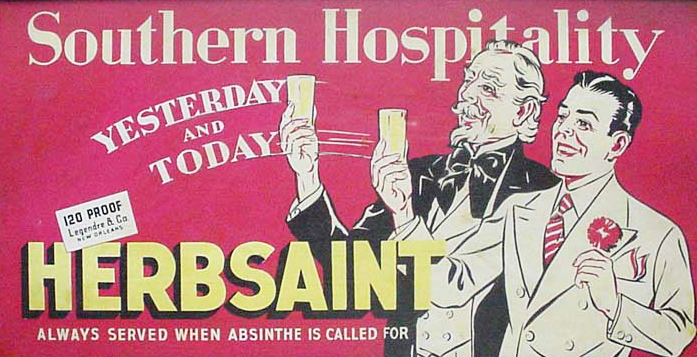
Generous "Southern Hospitality" was a staple of Southern pride.
 Paying the grocer and the wine merchant was not.

Fifty years later the economy of antebellum Charleston, according to historian Lawrence T. McDonnell, remained a "system that piled 'credit on credit' ...as boys make fanciful structures of cards.”

Under two different economic systems Northerners were viewed as skinflints; Southerners wastrels.

The Block


Yankee Puzzle by Denniele Bohannon


The pattern of half square triangles was published
as Yankee Puzzle about 1890 by the Ladies' Art Company.
Their sketch seems to be missing a few lines.


Cutting
The pattern is just a single triangle shaded in very light, light, medium and dark fabrics.


For the 12" block. Cut squares 3-7/8" (2 very light, 6 light, 6 medium and 2 dark). Cut each diagonally into two triangles.

For the 18" block. Cut squares 5-3/8".

Attributed to Canadian Fanny Ross Riley Rowley, a child of escaped slaves
See a post here: 


Yankee Puzzle by Dorry Emmer


This Month's Tangible Yankee Notion
Spool Holders

Thread Caddies & Spool Holders


Rachel Young King Anderson, Missouri


All those spools of thread rolling around....
You could organize them all by buying a spool holder for one or 
two dozen spools.

Missing pincushion at top

A purchased thread organizer might be considered an extravagance.

Especially if one had a handy relative...

Old-Time Tools & Toys of Needlework by By Gertrude Whiting

who could make one out of a few nearby parts.


Becky Brown's Blocks 1-9

Saturday, September 5, 2020

Enslaved Seamstresses: Mary in Columbus, Georgia

The Crystal Palace

Anne Catherine Boykin Jones, member of America's Southern elite, took a voyage to Europe to view the 1851 Great Exposition at the Crystal Palace in London.Her diary in the form of letters to sister Clara back in Columbus, Georgia describes a trip to Paris next where---being rich and fashionable--- she and her 14-year-old daughter were fitted for gowns by French dressmakers.


La Mode 1851 
Los Angeles Public Library

French fashion, silly as it may have been, was the Western world's standard. But 34-year-old Mrs. Jones was not pleased:
"Prices are exorbitant and we are not half as well fitted as Mary can fit me at home...."if my seamstress at home could only see what miserable fitting dresses her young mistress and I wore, she would be extremely mortified."
Measuring for a dress, 1890
California State Library

Anne (1817-1886) was the daughter of Camden, South Carolina native James William Boykin (probably a relative of Mary Boykin Chesnut whose Cassandra's Circle we are visiting in an applique quilt this year.)  Her father moved to Georgia where Anne was born in Baldwin County. She married James Randall Jones (1808-1871) and they became one of the oldest and most prominent families in Columbus, Georgia, according to a daughter's obituary.


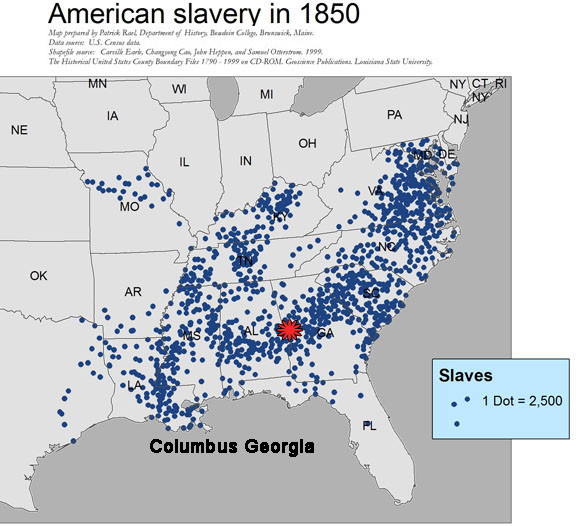
Columbus on the Chattahoochee River bordering Alabama was a planned mill town, the Lowell of the South. Western entrepreneurs brought slavery with them to the new western industrial areas.


The 1850 census lists 8 children for Anne, most of whom she left in Georgia under sister Clara's supervision on the European trip. Her husband had $20,000 worth of land, but did not list other assets, most of which would have been in the form of enslaved people, including Mary the adept seamstress. Undoubtedly there were many women  in the household---nursemaids, nannies or mammies---whose names we do not know.

Dressmaking 1869

Mary, the skilled seamstress, was likely an enslaved dressmaker, an important member of the plantation household.
Young women like Mary were trained at an early age in sewing the clothing for the slave-owner's family. A dressmaker or mantuamaker who could clothe the planters fashionably was valuable by any measure.


This 1853 ad in the Richmond, Virginia Daily Dispatch describes: 
"The Most Valuable Ladies' Maid ever offered for sale in the United States, a finished seamstress, tailoress, mantaumaker; cuts and fits with unequaled elegance and precision every garment of ladies' or gentlemen's attire."
Southern newspapers are full of ads for seamstresses.


I suppose I don't need to point out the irony of the Leesburg, Virginia's newspaper name The Genius of Liberty that advertised a woman whose mistress had died. She at 30 was "a good spinner and seamstress"and would be sold with her two babies on the courthouse steps in 1842.


Here is someone like Mary who "can cut out and make almost anything." Edward Eacho was a Richmond agent who ran an employment agency of some kind, hiring out slaves whose wages went to their owners.


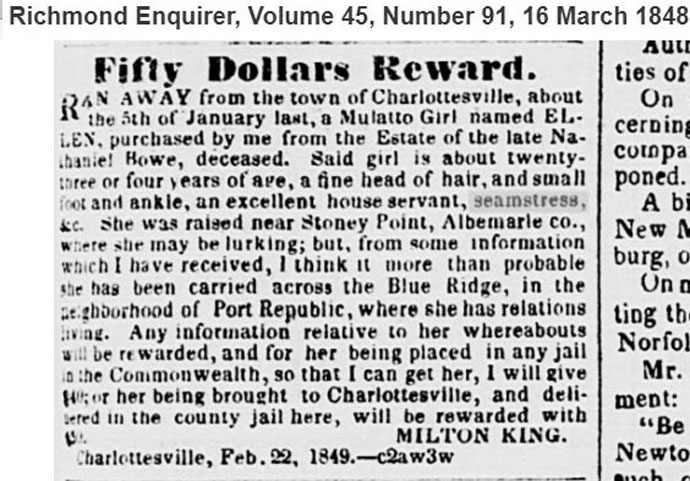
And a young women who practiced self-emancipation in 1848.

Let's hope no one in Charlottesville ever saw Ellen again and she made it 
 to Philadelphia where she opened a high-class dressmaking shop
and made a fortune. (I made that last part up.)

Sewing was one skilled area where an enslaved woman had an advantage (high-end cooking was another) in that she might be hired out as Elizabeth Keckley was and permitted to keep a portion of the wages. With her sewing earnings Lizzie Keckley bought her own freedom and that of her son.

Elizabeth Keckley's biggest sewing challenge may have
 been making someone with Mary Lincoln's taste
and figure look fashionable.
That's a skilled seamstress.

Wednesday, September 2, 2020

Wild Roses: Cassandra's Circle

Wendy Reed is doing a potholder version, quilt and bind as you go.

July's block from our Cassandra's Circle BOM. Pictures from our Facebook group, which has 1,238 members.
https://www.facebook.com/groups/2152934498369880
Debbie Robb ditto

Beth French

Dorothy Burkholder

Lisa Wagner

Karrin Capps Hurd

Valinda Kwasney

Peggy Sandfort