Wednesday, March 18, 2020

Mulberry Wreath Blocks

Rebecca, Mulberry Wreath
Block #2 Cassandra's Circle Block of the Month

Cassandra's Circle is definitely a group project. I didn't give you much to go on in Block #2
the Mulberry Wreath. Becky, Denniele & Pat interpreted it in different ways.


So it is great to see what readers have been stitching up.

Karrin followed the pattern with some shapely purple mulberries.

Lisa also managed to get it all in.


Beth liked Rebecca's look so put two mulberries per leaf.

And so did Peggy.


As did Maureen. She seems to have been inspired by Pat Styring's more complex mulberry leaves.


Rose Marie remembered the rule: Fill any visual vacuum with dots.
(I made that rule up or maybe Becky did.)
Her mulberry shapes cleverly wound up on top of the leaves.

Susannah---dots always good.
She really filled the block gracefully.

Dorothy's is all her own.

Me---I'm doing it half size. There will be more stuff on this when
I get the whole thing set, I think. Dots. Embroidery ala Sue Spargo.

Hoping you are inspired to add and rearrange.
Block #3 next Wednesday March 25th.


Saturday, March 14, 2020

Ephrena Wagner's Eagle Quilt

Eagle with an anchor and a snake, wool embroidery on cotton.
Attributed to Ephrena or Elphrena Hennings Gerhard Wagner (1841-1922)
 of Skippack Township, Montgomery County, Pennsylvania.

82" x 84"

The quilt, in the collection of the Goschenhoppen Historians in southeastern Pennsylvania, was recorded in their quilt project several decades ago as having been made by Ephrena when she was recovering from scarlet fever as a girl, according to her granddaughter who thought it might have been made before 1860 when the maker was a teenager. My first thought was that the patriotic display might be a Civil-War quilt and Ephrena had done the embroidery slips (separate embroidery to be attached) when she was a child and stitched them to a later quilt.


See: Nancy and Donald Roan's book. Lest I Shall be Forgotten. Anecdotes and Traditions of Quilts.

The fabrics could be as old as the Civil War; solids are so hard to date. Parts are hand-appliqued, parts machine-appliqued. The blues are deteriorating in the strange fashion that Prussian blue dye does. I remember visiting the Goschenhoppen project and wondering with Nancy Roan what was going on here.
Dye migration? I don't think indigo does this.


Reverse appliqued seeds in the fruit around the edge revealing
a double pink print.

Looking at the photos closely now I wonder just when it was made.

Someone counted the stars on the flags and came up with 38,
the number in 1876 when Colorado became the Centennial state.

This might more likely have been a Centennial quilt than a Civil War quilt.

I haven't found another thing out about Ephrena, an unusual name also spelled Ephrina, Elphrena.

The 100th anniversary of the Declaration of Independence
caused a flurry of interest in quiltmaking., this one from Sotheby's auction
ten years ago. The celebration fair was in Philadelphia not far from Ephrina's home.

Quilt from the Fenton Museum in Danbury Connecticut.
 Connecticut project & the Quilt Index


Maria Whetsone Hallett
from the Ohio project's book

Anchors in a quilt signed Mary Haddy, from Cape Cod.
Collection of the New England Quilt Museum
Along the top it says Centennial 1876

Wednesday, March 11, 2020

Yankee Notions #3: Water Wheel

Yankee Notions #3
Water Wheel by Denniele Bohannon

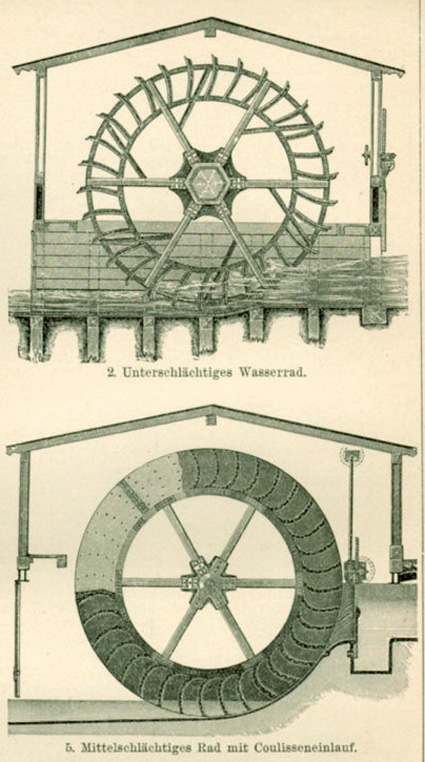
Water wheels represent the Yankee Notion of industry.

Two styles of water wheels that use a moving stream
to power machinery, technology suited to New England's
topography. 

Steam and then electricity replaced water wheels as a power source.

 #3 Water Wheel by Becky Brown

Northern view of  the pre-War division of labor in the South

Many essayists have discussed Yankee notions contrasting Northern culture with Western, Midlands and especially Southern culture. One sees the cultural conflict in newer states like Illinois settled by people from North and South who now lived side-by-side.
"Southerners enjoyed a relaxed work ethic, which both amused and miffed Yankees, who sported a finely tuned work ethic, one that never seemed to rest."
James E. Davis gives you an overview summarizing the clash of ideas concerning the use of time:
https://www.lib.niu.edu/2009/iht09150211.html

Some pre-Civil-War Southerners suggested their economy might benefit from a few Yankee notions.
"An infusion of a little Yankee industry and capital into the arteries of Virginia will produce a beneficial effect." enthused the Richmond Enquirer in 1845. 


But even after the War when it was clear that the plantation economy was no longer viable there was a resistance to change.
"Why are we as poor as Lazarus while they roll in wealth? I will tell you. Because there is hardly a town in New England...where you do not hear, all day and night, the buzz of machinery, the panting of the steam engine, the whirr of the driving wheel; and because in our towns, this music of industry and thrift is with few exceptions, never heard." Southern Farm & Home 
On the other hand, fans of the whippoorwill's song might not consider all that buzzing, panting and whirring desirable.

Water Wheel by Dorry Emmer (12 inch version)
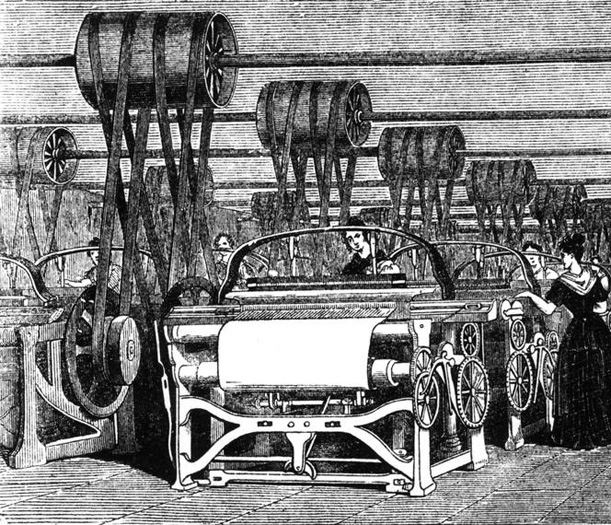
Waterwheels below the factories powered machinery
with pulleys and belts...

that ran pistons that moved the shuttles.

Lewis Hine photo of a mill girl preparing the yarns for the loom,
 "drawing in" about 1910. Library of Congress.

The noise was deafening.

The Block


Water Wheel by Denniele Bohannon
Her 18" version

This nine patch with many ways to shade it was
called Water Wheel by Farm Journal and the Chicago Tribune's
Nancy Cabot column.

But the pattern is older: This one about 1900

12" Finished Block

A - Cut 16 squares 2-1/2".
B - Cut 2 light and 2 dark triangles 4-7/8".
C - Cut 1 square 4-1/2".

18" Finished Block

A - Cut 16 squares 3-1/2".
B - Cut 2 light and 2 dark triangles 6-7/8".
C - Cut 1 square 6-1/2".

Dorry's 9-inch blocks feature a Yankee Notion,
here a pincushion.

Yankee Notion of the month
Pins


Pins  made of bone and bronze go back in history for centuries but hand-hewn metal pins were expensive and labor intensive. Connecticut is proud of Yankee John Ireland Howe who in 1832 manufactured the first practical machine-made pins after watching  inmates in a poor house earn their keep by making hand-processed pins. Pins soon were an important New England industry powered by the water wheels of the 19th century.

Connecticut Historical Society

Today we buy our pins in plastic boxes, not nearly the fun pin dispensers used to be

Pin cubes & Pin Rolls
1893 mail order from Carson Pirie Scott

A Pin Ball

A Pin Wheel


Read about the archaeology of pins in Mary Carolyn Beaudry's Findings: The Material Culture of Needlework And Sewing.
Link to a preview:


Blocks 1 - 3 Becky Brown's Yankee Notions

Saturday, March 7, 2020

Stolen? Confiscated? Plundered? Quilt Block

James A. Colehour

Vicki Wendel called our attention to this little piece of
patchwork in a museum in Minnesota, far from Waynesboro, Georgia.


It's silk hexagons with a rather crudely inked date of December 4, 1864, probably not the date it was made but the date it was acquired on a battlefield in Waynesboro. The Battle of Waynesboro, Georgia (December 4 &5, 1864)  was one of many between Confederates and Sherman's Union troops on their "March to the Sea" after the capture of Atlanta a few weeks earlier.

Waynesboro, south of Augusta, Georgia is not far
from the Georgia/South Carolina border.


James Allison Colehour (1842-1938) seems to have taken a battlefield souvenir and saved it all his life.

There are many ways to spell Wainesborough. The silk scraps
are pieced over paper hexagons perhaps cut from letters.

James was one of six brothers and a sister, originally from Pennsylvania, whose family migrated to  Mount Carroll, Illinois in 1854. When the Civil War began James and David Colehour joined the 92nd Illinois Infantry. James served in Company 1 under General Smith D. Atkins.


The "Butternut Crackers"
From a 1921 reunion that James attended


Lt. David Colehour

Both David and James were hospitalized with typhoid fever in a Nashville hospital in the spring of 1863. Lt. David Colehour died in March at 24 years old.

Hiram's house, built in 1860, still stands in Mount Carroll

Their eldest brother Hiram Supplee Colehour came down to retrieve David's body and visit a very ill James. Hiram caught typhoid himself and died in May at 31 years of age, leaving a wife with six children.
http://genealogytrails.com/ill/carroll/carrollfamilycolehour.html

This all must have been an unimaginable series of disasters for their mother Hannah Richards Colehour (1805-1897) who had lost her husband Henry a few years earlier. Another son Isaac died at the end of the year.

James survived and rejoined his unit. He fought at the Battle of Chickamauga in September, 1864 where he was shot in the shoulder, one of three wounds he received in the war. But by December he was back with his regiment at the Battle of Waynesboro.

The surviving Colehours seem to have been made of strong stuff as mother Hannah lived to be 94 and James to 96. But after the war James was advised that the Chicago atmosphere was too much for him and he moved with many in his extended family to the resort town of Battle Lake, Minnesota up near Fergus Falls. He and his wife built a large house there in the 1880s, a hotel for summer visitors.

Prospect House

James collected numerous items and was averse to tossing them out. With a large house he didn't really have to. Prospect House and its contents remained in the family. Great-grandson Jay Johnson was thrilled to find letters, diaries and all manner of souvenirs in the house, including this piece of patchwork. Johnson opened a Civil War Museum in Prospect House.
http://www.prospecthousemuseum.org/index.php

Waynesboro, Georgia in the 1930s.

Someone in Georgia lost a piece of patchwork in 1864. Vicki tells us that the museum indicates James "took the block from a house as a souvenir of his being there. I doubt he had permission, so I guess 'theft' would be a fair description."

Union soldiers finding the buried silver spoons with a little help
from a former slave.

Was the block a theft? Stolen? Stealing implies stealth but it's likely there was no sneaking around the Georgia house. Perhaps a more accurate description would be plundered, pillaged or looted. General William Tecumseh Sherman's army, to which James belonged, was notorious for ransacking Southern homes and plundering valuables. Soldiers were encouraged to "forage liberally on the country during the march."

Southern history of the end of the war still echoes with tales of Sherman's army's cruelty as if it were plain meanness or just bad manners to treat civilians so. We should not miss the point --- and Sherman had a point to make. He was an innovator of the "scorched earth policy," a systematic terrorizing of the civilians so they would demand an end to the war. 

"Foragers" Harper's Weekly, April, 1865

"He sought to utilize destructive war to convince Confederate citizens in their deepest psyche both that they could not win the war and that their government could not protect them from Federal forces," according to a post at Battlefields.org. Read much more about Sherman's March:
https://www.battlefields.org/learn/articles/scorched-earth

Stealing silver, clothing, food and quilts---and parts of quilts---was a strategy.

"War is hell," as Sherman said.

Here's a post on another plundered patchwork.
http://civilwarquilts.blogspot.com/2019/12/battle-trophy.html