Saturday, January 23, 2016

A Sanitary Commission Quilt Arrives in Bowling Green

Boxes and barrels headed to Louisville from Ohio

Josie Underwood was a young woman living with her pro-Union parents in the Union state of Kentucky in 1862. In June a load of Sanitary Commission supplies arrived in town for the Federal soldiers occupying the town and the injured men in the hospitals. Among the barrels and boxes: a box of quilts.

June 15, 1862
Bowling Green, Kentucky
"Ma has been appointed-receiver and distributor of sanitary stores, sent by various societies throughout the north. The first consignment came today ...Ma had a room on the back porch cleared for them---but it would not hold half---so they are piled up on the porch and a soldier has been detailed to guard them....A box of quilts was opened---on one was pinned a paper---with these lines written on it.
Mary Jackson is my name
Single is my station
Happy will be the soldier boy---
Who makes the alteration.
All the soldiers there---clamored for it, declaring their desperate lack of covers. Ma told them to stand in a row and draw straws for it."

Detail of a Sanitary Commission stamped fabric
that Linda Frost made for a reproduction soldier's
quilt based on the kinds of quilts sent in those boxes and barrels.

Sanitary Commission Headquarters at Gettysburg, summer, 1863

Josie Underwood's Civil War Diary has been edited by Nancy Disher Baird and published by the University Press of Kentucky.

Read more about her family at this post:
http://opinionator.blogs.nytimes.com/2012/03/03/the-fall-of-the-house-of-underwood/

The main bridge and the Underwood home were burned when Confederate
occupiers left Bowling Green.

UPDATE: It's Sold

Linda and I are selling models we've made for various books
and classes at my Etsy store. 

Wednesday, January 20, 2016

Another Human Sewing Machine


Gladi's
We Are Stardust

She's a sewing machine.
This is Gladi's third quilt with her stars.

There are 145 stars in here
if I count correctly, which rarely happens.

https://gladiquilts.wordpress.com/2016/01/06/january-6-2016-we-are-stardust-top-center-sans-border-complete/

Saturday, January 16, 2016

Mary Custis Lee's Raffle Quilt

Quilt with the initials MC embroidered in the center,
attributed to Mary Randolph Custis Lee. 
Collection of the Virginia Military Institute Museum
"I had hoped to have had the Quilt ready to raffle but gave the Book to Sue Maury & she has not yet returned it unless some of the students will take chances, I fear it may be some time ere it is done - Perhaps Mrs Freeman would take a chance Do you know her?" 
"Tell your Mother the Quilting is so much admired & I am so much obliged to her why have you never brought her to see me? " Letter from Mary Custis Lee.
Mary Randolph Custis Lee and her son Robert E. Lee, Jr,
about 1845. Collection of the Virginia Historical Society.

In this undated letter Mary Custis Lee seems a bit frustrated in trying to organize a quilt raffle. Sue Maury appears to have kept the book of chances and sales were at a standstill.

Washington College in 1870. 
Collection of the Virginia Historical Society.

The letter has no date or location but it is likely to be from Lexington, Virginia, where General Robert E. Lee and his wife moved in December, 1865. Lee spent the years after the Civil War as President of Washington College there. Two of the other women mentioned are also recorded in the 1870 Lexington census.

Sue Maury (Mrs. Richard Launcelot Laury) was born Susan Elizabeth Crutchfield in 1842. She was 34 years younger than Mary Lee, probably in her late 20s when the letter was written. History has not treated her well. In a biography of her father-in-law Matthew Fontaine Maury, author Patricia Jahns described her as "a beautiful girl with money, social position, and influential relatives and utterly no sense of humor."
All we can do is hope that Sue returned the ticket book and some sales were made.

The letter's addressee, Mrs. Letcher, was another Sue, Mary Susan Holt Letcher (1823-1899), the wife of Virginia Governor John Letcher who held office during the Civil War.

Sue Maury's husband Major Dick Maury.
Maury spent the years 1865-1868 in Mexico
trying to set up a Confederacy there, but returned to
Virginia in 1868. He was law partner to Sue Letcher's husband John.

Apparently Sue Letcher's mother quilted the quilt in question doing a job that was "so much admired." Elizabeth Shaver Holt Yount, 67 years old, was living with the Letchers in the 1870 census. 

In 1898 the Lexington Gazette recalled the local lineage of her grandson Judge Houston Letcher.
"Miss Sue Holt married Governor Letcher---then plain John Letcher, attorney at law-on Linsville's Creek. She was a lady of rare accomplishments, her mother being a Miss Shaver..."


As far a date for the letter: Mary Custis Lee lived until 1873 so it was written some time between 1865 and 1873.

Is the plaid quilt in the collection of the Virginia Military Institute's Museum the quilt they are hoping to raffle? It is pictured in the Quilts of Virginia book captioned:
"Quilting is executed at 12 stitches per inch in crosshatching and chevron with double straight lines."

The fabric is silk plaids, the popular Balmoral look of the 1860s that was out of fashion in the 1870s. In the center is an embroidered wreath with birds and leaves. 

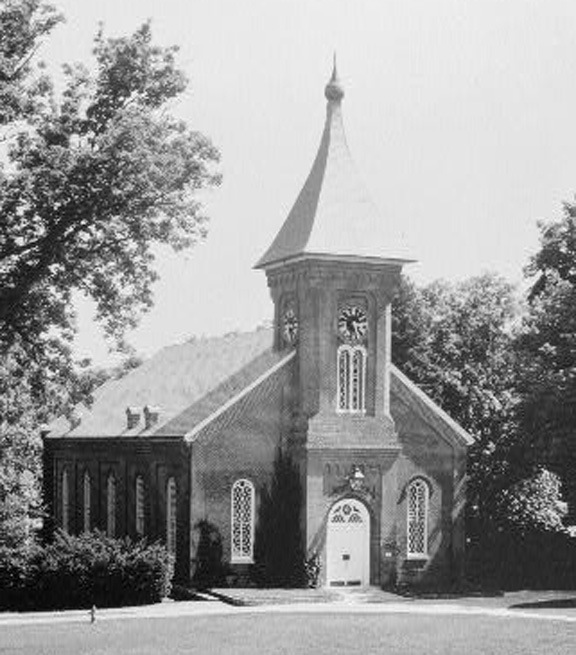
The  R.E.Lee Memorial Chapel at Washington & Lee University

The tickets were sold to fund the chapel at Washington College which became Washington and Lee University. Robert E. Lee is buried in the chapel. Lee died October 12, 1870 and whether the quilt was made before or after his death is unknown. The letter refers to students taking chances. The ladies may have offered tickets to students at the College and the Military Institute.

The quilt was donated to the museum at VMI in 1926, accompanied by a letter described in the museum catalog: "1926) from Mrs. William B. Anderson to Sydney B. Williamson relating the history of a quilt made by Mrs. Lee."  Williamson is supposed to have bought the winning ticket in the raffle.
Sydney Bacon Williamson 1865-1939

Sydney Bacon Williamson was about 7 years old when the quilt was raffled off. Born in Lexington, he was the son of Thomas Hoomes Williamson, an engineering professor at VMI. The younger Williamson was an engineer also, his most important project the Panama Canal.

 Thomas Hoomes Williamson 1830-1888

Virginia Military Institute

We can see how the quilt wound up in the VMI Museum.


Lee's Medallion, Jean Stanclift, quilted by Sharyn Rigg, 2000

See more about Mary Lee's quilts at a post I wrote six years ago (six years!) featuring this plaid flannel quilt that Jean made 16 years ago (16!)

http://barbarabrackman.blogspot.com/2010/01/robert-e-lees-birthday-mary-custis-lees.html

Wednesday, January 13, 2016

Sewing Machines

The other Barbara B has pieced quite a few borders around her Hewson square.
She has plans for more...

Another human sewing machine
(who works by hand)
 Jill has plans for two tops

And Lori at Humble Quilts
who finishes more things than I even think of starting
has set stars with a chrome yellow/orange.

Her favorite block.


Her plan.
You can't go wrong with cheddar can you?
More proof below....


Top from Cécile in France

Saturday, January 9, 2016

Liberty Tree Battle Memorial Quilt by Mrs. S.K. Daniels

Liberty Tree Quilt by Mrs. S.K. Daniels.
Date-inscribed 1896 
69" x 80" 
Collection of the Museum at Michigan State University
Purchased in Kentucky
Kitty Cole Clark Collection

"Mrs. S K Daniels Mach (sic) 1896,"

Mrs. Daniels made this fashionable quilt in 1896 according to her inscription in red work embroidery along the edge. We assume she meant March, 1896.

She used a popular pattern of the time, possibly copying
one sold by the Ladies's Art Company

Her pattern is close to #260 above in the Ladies' Art Company
1898 catalog of patchwork designs. They called it "Tree of Paradise"

But she embroidered "Liberty Tree" in one of the central blocks.


Other early 20th century names for this particular block included
Christmas Tree Patch from Comfort Magazine and Pine Tree from
Ruth Finley's 1929 book.

Most of the white spaces in the center and along the borders are embroidered with 
Civil War battle names, dates and Generals. 
Above:
 "Pittsburg Landing April 1862," 
"Pittsburg Landing April 6 1862."

Pittsburg Landing on the Tennessee River near Corinth, Mississippi was
the site of the important battle known as Shiloh in the Confederacy.

It must have meant a great deal to Mrs. Daniels.

Similar inscriptions from other battles include:

"Wilson Creek, MO Aug 10 [1]861 Lyon," 
"Raleigh NC Aprill 26, 1865 Sherman,"

Although the dates are during the Civil War, the embroidery style in Turkey red cotton indicates she embroidered them after 1880, a date consistent with another inscription: "Wm McKinley 1896."  


McKinley was elected to his first term in 1896. The inscription might have been a celebration of his November election or an advocacy of his candidacy earlier in the year.
Another embroidered name is recorded as "C A Hobert," which probably refers to McKinley's 1896 running mate Garret A. Hobart.

Mrs. Daniels also embroidered a Temperance slogan
in the center: "Abstain from Strong Drink."

Searching for Mrs. S. K. Daniels in the published records comes up with two:

1) Alice Daniels and S K Daniels in the 1880 census, 5th Ward, East Baton Rouge, Louisiana.

2) The grave of  "DANIELS, Annie b. Mar 3, 1851 d. Oct 17, 1900 Wife of S.K. Daniels"
in the Teoc Presbyterian Cemetery in Carroll County, Mississippi (about 170 miles southeast of Corinth)

Could one of these women be the same Republican who called the Battle of Shiloh Pittsburg Landing? If she were indeed a Southerner we'd assume she kept this quilt well out of sight.

The Museum has transcribed the block inscriptions in the center:

"Appomattx, VA. April 1, 1865. Grant," 
"Liberty Tree," 
"Abstain from Strong Drink," 
"Hatchers Run Feb. 5 to 7 1865 Grant," 
"Pittsburg Landing April 1862," 
"Pittsburg Landing April 6 1862." 

Inscriptions around outer edge: "Wm McKinley 1896,"
 "Appomatax April 1865 Grant," "Five Forks 1 April Sheridan,"
 "Wilson Creek, MO Aug 10 861 Lyon," 
"J B Tanner,"
 "One Flag One Country,"
 "Marching through Georgia,"
 "Atlanta Georgia July 22 1863,"
 "Mrs. S K Daniels Mach 1896," 
"Wm.. Northcott,"
 "Five Forks Mo. April 1 1865 Sheridan," 
"Raleigh NC Aprill 26, 1865 Sherman," 
"Raleigh NC April 26 1865 Sherman." 

Additional inscriptions: "C A Hobert," 
"Battle of Chickamauga Sept 199-20 1863,," 
"We love the dear old Flag,"
"Washington, Lincoln, Grant," 
"Battle of Chattanooga Dec 23, 24, 25 1863"

Wednesday, January 6, 2016

Westering Women Block of the Month 2016


In 2016 we are going to feature a Block of the Month here for 12 months called Westering Women, celebrating the women who walked west on the overland trails in the 19th century.

Photo of family and an oxen-pulled wagon, about 1900

On the last Wednesday of each month beginning January 27, 2016, I'll post a free pattern and history lesson about America's western migration. Westering Women will have patterns for 12" block designs, each chosen for a traditional name that recalls a location along the old trails from the Missouri River to the Pacific coast.

Amelia Stewart Knight left a diary of her 1853 trip

You'll get a monthly view of the history of the western migration through the eyes of the women who kept diaries and wrote letters home a century and a half ago.

Wagon train from Harper's Weekly in 1858

I'll post the monthly lessons here at the Civil War Quilts blog on Wednesdays (along with regular Saturday posts about Civil War quilts.)

Independence, Missouri published by Herrmann J. Meyer
in 1854

So get your gear ready and meet us in a few weeks at the jumping off point on the Missouri River in Independence.

Re-creation of the interior of a wagon---spinning wheels were often tossed along the trail.


What should you pack in your small valise? Any kind of fabric you like. We'll be using Civil-War era reproductions prints such as my Old Cambridge Pike and Alice's Scrapbag lines, but you might want to use solids or brights..


Here's a bunch of new Moda fabrics to think about. The colors are perfect for a mid-19th-century theme.


UPDATE: It's 2017 and we've trekked to California. I will leave the Westering Women  links with free patterns uo through 2017 but you may prefer another pattern format. If you would like to have the patterns as PDF's you can download and print the set of 12 blocks. I also can mail paper patterns to you (U.S. Postage included). Here are links to buy the patterns in my Etsy Shop:

Instant Download PDF $15

Paper Patterns Through the Mail $22.50.

Saturday, January 2, 2016

More About Quiltmaker Susan Robb

Confederate applique quilt made by 
Susan Robb,1861-1862. Chicot County, Arkansas
Collection of the Museum at Texas Tech University

Susan Robb's quilt was on display at The Autry Museum in Los Angeles through January 3, 2016, as part of the exhibit Empire and Liberty: The Civil War in the West. 

See the Autry Museum's website here:
http://civilwar.theautry.org/

When the Civil War began Susan Robb was a farmer's wife, living in Chicot County, Arkansas in Planters Township near Eudora. The quilt is attributed to the first years of the war, 1861-1862, when Robb's stepsons William Henry Robb (born 1844) and Theodore F. Robb (born 1846) joined the Arkansas Confederate troops. Theodore's records are hard to find but William left several.


In September 19, 1861, when he was 16 years old William joined the Chicot Rangers, which became the First Arkansas Mounted Rifles. William's company spent time in Indian Territory and Arkansas before crossing the Mississippi as part of Van Dorn's army and later Beauregard's. William served a little over a year with the First Arkansas and was discharged in Tennessee, November, 1862.

His stepmother Susan C. Davenport Robb was probably born in 1822 in Kentucky. In 1849 when she was about 27 she married Henry Baron Robb, 43 years old. Robb had been married twice before and Susan became stepmother to William and Theodore, 5 and 3 years old, and their sister Minerva, about ten.

Mississippi with Coahoma County in yellow. 
The Mississippi River
forms the western border between
Mississippi and Arkansas

The family moved to Coahoma County, Mississippi, near the Mississippi River where the couple had three more children: Mary, born about 1849, who died at a young age, Aaron Baron born in 1851, Thomas Jefferson born in 1854. (Mary is listed as 1 year old in the 1850 census so she may have been born to Henry's middle wife.)

Sometime between Thomas's birth and the 1860 census the family moved just across the Mississippi  to Chicot County, Arkansas, 

The 1860 Census recorded Henry Robb's family.
He was listed as a Planter

When the war began and Susan commenced working on her Confederate quilt she was about forty years old, wife to a 55-year-old farmer and mother to six children ranging in age from about 6 years old to 17. Minerva had just married and left home. Susan may have had live-in help from servant or friend Julia Zale who had also lived in Mississippi.


Henry died soon after the war in 1866.  That year 45-year-old Susan C. Robb married David (or Davis) S. Ruple in Chicot County on May 28. 

Ruple, Davis S., 44
 Robb, Susan C., 45
 28 May 1868
 43

Record here:

1850 Census showing David Ruple's first family with wife Nancy
and two young children Charles and Mary

David Ruple, born in 1822 was listed in the Chicot County census in 1850. His name is spelled in various ways Ruplo or Ruple (probably correct) and Davis or David. 


In 1870 Susan Ruple and David Ruple lived in Chicot County with three teenaged boys, her sons Aaron Baron and Thomas plus David's son Greenberg Ruple who was about 10 when they married.


Susan C. Davenport Robb Ruple died in 1887 in Carrollton, Texas. The Texas connection would explain how the quilt wound up at the Museum at Texas Tech.

Susan's descendants visited the Museum to see the family quilt in 2010.

The quilt was donated to the Museum at Texas Tech University in 1983.